Philadelphia, PA · Updated
Kitchen Flooring in Philadelphia: Costs and Permit Rules
Traditional rowhouse floors are wood or tile, as noted by the City Planning Commission (Philadelphia City Planning Commission - Philadelphia Rowhouse Manual).
Free for Philadelphia homeowners. One pro, named before they contact you.
Philadelphia requires a building permit for work that changes the interior or exterior of an existing structure, but conventional floor coverings not made of fibers (e.g., wood, vinyl, tile) do not require a permit (City of Philadelphia - Get a Building Permit) (City of Philadelphia - Get a Building Permit). If your project involves porch or deck flooring up to 200 sq ft, the residential permit fee is $63 (L&I Summary of Construction Permit Fees (effective Oct 1, 2026; Rev 7.2026)). For other work requiring a permit, the filing fee is $25 for one- or two-family dwellings, plus a $3 city and $4.50 state surcharge per permit (City of Philadelphia - Get a Building Permit).
When to Replace Kitchen Floor Tile in Philadelphia
Replacing kitchen floor tile in Philadelphia depends on the material and size of the job, especially if asbestos is involved. Local rules apply for larger removals, but most materials last decades with proper care.
If your kitchen floor shows signs of wear or damage, consider replacing it when it no longer functions well or looks appealing. For example, vinyl flooring can last up to 50 years, while solid hardwood is often considered long-lasting (NAHB/Bank of America Home Equity, Study of Life Expectancy of Home Components (Feb 2007), Table 1). However, if you're removing old tile and it contains asbestos—common in older homes—you must follow local regulations. Removing 40 linear or 80 square feet or more of asbestos requires an Air Management Services permit; smaller jobs still need notification. Always verify the material before starting any removal work to avoid legal and health risks.
Kitchen floors made from tile, stone, or concrete typically last between 50 to 100 years under normal conditions (NAHB/Bank of America Home Equity, Study of Life Expectancy of Home Components (Feb 2007), Table 1), but moisture or heavy use can shorten that lifespan. Engineered wood flooring is another durable option, with a service life of 50+ years when installed correctly (NAHB/Bank of America Home Equity, Study of Life Expectancy of Home Components (Feb 2007), Table 1). If you're unsure about the condition of your floor or need help determining the right time to replace it, consult a professional in writing for guidance tailored to your home's specific needs.
What are the rules for replacing kitchen tile in Philadelphia?
Philadelphia requires an Air Management Services permit if removing 40 linear or 80 square feet or more of asbestos-containing floor tile. Smaller removals still need notification. Always confirm whether your existing tile contains asbestos before beginning any work to comply with local regulations.
What changes the price in Philadelphia
Local rules and conditions that affect what to do, pick or pay for this job, with sources. More rows: full table.
| Local rule or condition | What it changes | Source |
|---|---|---|
| From October 1, 2026, Philadelphia alteration permits for 1-2 family homes cost $76 for the first 500 sq ft plus $56 per additional 100 sq ft; applicants may instead pay 2% of construction cost (min $253) | A $76 fee applies for the first 500 sq ft of kitchen flooring, with additional costs per 100 sq ft or 2% of construction cost (source). | L&I Summary of Construction Permit Fees (effective Oct 1, 2026; Rev 7.2026) |
| Philadelphia's published review time for one- or two-family alterations and additions is 15 business days; accelerated review in 5 business days costs $2,000 | Permit review takes 15 business days, but can be expedited to 5 days for an extra $2,000 (source). | City of Philadelphia - Get a Building Permit |
Illustrative example based on the public data cited on this page (October 2026), not a quote — your contractor's written contract sets the price.
Philadelphia kitchen flooring jobs that may not need a hired pro
Philadelphia kitchen flooring jobs that may not need a hired pro include vinyl installations if they meet local guidelines and do not require permits.
Yes, you can install vinyl flooring in your kitchen without hiring a pro if the work doesn’t require a permit. Philadelphia allows certain floor coverings without permits, including vinyl, as long as they meet local guidelines.
Philadelphia permits are required only for work that changes the interior or exterior of an existing structure, which excludes standard flooring installations like vinyl (City of Philadelphia - Get a Building Permit). This makes DIY vinyl flooring a viable option for many homeowners. If you plan to install vinyl over existing subfloors, ensure they are smooth and level to avoid future issues such as cupping or uneven surfaces.
Related for Philadelphia homeowners: Tile Floor Installation and Hardwood Floor Repair.
Can I install vinyl flooring in my kitchen without hiring a pro?
Yes, vinyl flooring can often be installed by a homeowner without hiring a pro if it does not require a permit. Philadelphia’s local rules allow conventional floor coverings like vinyl without permits (City of Philadelphia - Get a Building Permit). However, always check for any structural changes that might need approval before starting the project.
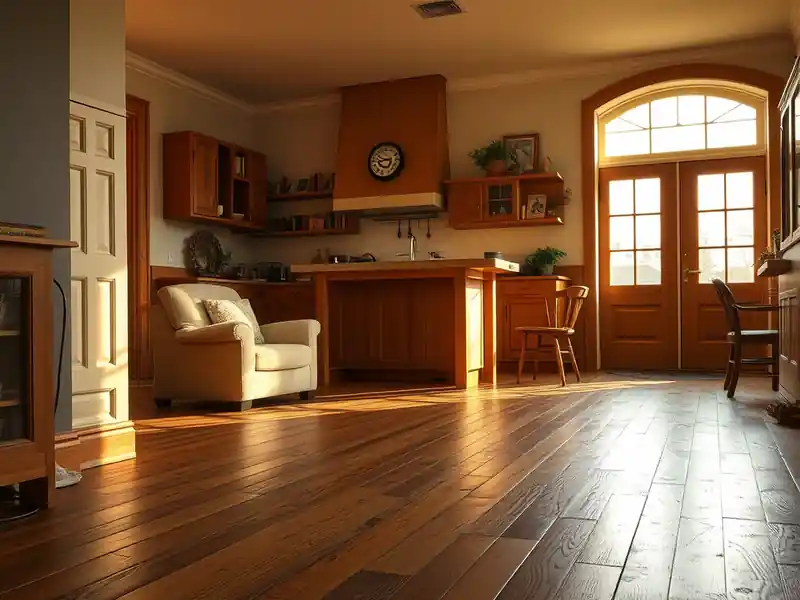
What to Know About Building Permits for Kitchen Flooring
Replacing kitchen flooring in Philadelphia may require a permit depending on the material used and work scope, with fees varying by type of project and size of home. Check local rules to avoid unexpected costs.
The filing fee for one- or two-family dwellings is $25 plus surcharges (City of Philadelphia - Get a Building Permit), though future changes may alter this rate (L&I Summary of Construction Permit Fees (effective Oct 1, 2026; Rev 7.2026)). Always check with the city’s L&I portal for the most current requirements before starting your project.
Philadelphia permits for flooring work are applied for online via eCLIPSE, and review times vary between 5 to 15 business days depending on urgency (City of Philadelphia - Get a Building Permit). If your kitchen floor replacement involves removing old materials like asbestos-containing flooring, an additional permit with a separate fee applies (Philadelphia AMS - Guide to Asbestos Abatement Permits). This ensures compliance with city codes and avoids delays. For more details about permits specific to your project, visit the permits section of Philly Floor Planner [permits/].
Permit rules from City of Philadelphia - Get a Building Permit. Rules change — confirm with the Philadelphia building/permit office before you start.
Verify a contractor’s license by checking they carry at least $500,000 general liability insurance and have OSHA 30 training within five years (City of Philadelphia - Get a Contractor License).
Parts of a kitchen flooring job you can handle yourself
A homeowner may handle minor repairs or refinishing if the work is limited to one area and does not involve structural changes. For full installation, a pro is recommended due to local regulations and safety concerns. Always ensure slip-free surfaces in older homes.
What a fair kitchen flooring quote in Philadelphia should list
- Quote should include the price per square foot and materials used.
- Scope of work must be clearly defined, including any slip-resistant surface requirements for older homes.
- Contractor must carry $500,000 general liability insurance as required by local law (City of Philadelphia - Get a Contractor License).
- Written contract is necessary if the job exceeds $500 (PA Senate - The Home Improvement Consumer Protection Act (explainer)).
- Quote should specify whether any permits are needed and who will obtain them.
Next steps for your kitchen flooring project in Philadelphia
- Contact the Philadelphia Historical Commission if your home is in a historic district.
- Check for tripping hazards (ACS 5-year 2020-2024, B25034 Year Structure Built)
- Visit local offices to confirm permit requirements for any structural changes.
Before you say yes, ask
- Is the labor warranty written?
- Who hauls away the old floor?
- What if we run short?
- What if the subfloor is uneven?
- How long does the install take?
Common questions about kitchen flooring in Philadelphia
What factors influence kitchen flooring costs in Philadelphia?
Costs depend on material type (wood, tile), labor rates, and house age. Traditional rowhouse floors use wood or tile (Philadelphia City Planning Commission - Philadelphia Rowhouse Manual). Older homes may need slip-free repairs to avoid tripping hazards (Philadelphia City Planning Commission - Philadelphia Rowhouse Manual).
Are licenses required for kitchen flooring work in Philadelphia?
Philadelphia does not require a contractor license for work on existing one- or two-family dwellings without special-trade work; however, homeowners can verify a PA Home Improvement Contractor via the Attorney General's database or by calling 1-888-520-6680 (City of Philadelphia - Get a Contractor License) (Find a licensed contractor and contractor information (City of Philadelphia)). Home improvement contracts over $500 must be written (PA Senate - The Home Improvement Consumer Protection Act (explainer)).
Do I need a permit to install flooring in Philadelphia?
Yes, if you are installing flooring that changes the interior or exterior of an existing structure, except for conventional floor coverings not made of fibers (e.g., wood, vinyl, tile) and carpeting. For other types of flooring, a permit may be required depending on the scope of work.
Related
Get matched with one Philadelphia pro
Before they contact you, we give you the pro's name. Ask them for their license number and check it yourself — look it up at hicsearch.attorneygeneral.gov.
Page history
- — Updated 99% of the text; new sections: When to Replace Kitchen Floor Tile in Philadelphia, What in Philadelphia changes a kitchen flooring job, Philadelphia kitchen flooring jobs that may not need a hired pro; removed: Kitchen Floor Tile Replacement in Older Homes, DIY Kitchen Flooring Jobs in Philadelphia, Best Flooring for Kitchens in Philadelphia
- — Updated 99% of the text; new sections: Kitchen Floor Tile Replacement in Older Homes, DIY Kitchen Flooring Jobs in Philadelphia, Best Flooring for Kitchens in Philadelphia; removed: When to Replace Kitchen Floor Tile in Philadelphia, What in Philadelphia changes a kitchen flooring job, Philadelphia kitchen flooring jobs that may not need a hired pro
- — Updated 8% of the text
- — Updated 99% of the text; new sections: When to Replace Kitchen Floor Tile in Philadelphia, What in Philadelphia changes a kitchen flooring job, Philadelphia kitchen flooring jobs that may not need a hired pro; removed: Kitchen Floor Tile Replacement in Older Homes, DIY Kitchen Flooring Jobs in Philadelphia, Best Flooring for Kitchens in Philadelphia
- — Updated 99% of the text; new sections: Kitchen Floor Tile Replacement in Older Homes, DIY Kitchen Flooring Jobs in Philadelphia, Best Flooring for Kitchens in Philadelphia; removed: When to Replace Kitchen Floor Tile in Philadelphia, What in Philadelphia changes a kitchen flooring job, Philadelphia kitchen flooring jobs that may not need a hired pro
- — Updated 99% of the text; new sections: When to Replace Kitchen Floor Tile in Philadelphia, What in Philadelphia changes a kitchen flooring job, Philadelphia kitchen flooring jobs that may not need a hired pro; removed: Kitchen Floor Tile Replacement in Older Homes, DIY Kitchen Flooring Jobs in Philadelphia, Best Flooring for Kitchens in Philadelphia
- — Updated 7% of the text
- — First version
Only content changes are listed here; spelling and layout fixes are left out.